The Captive Frontier: Why Industrial Conglomerates Are Building Their Own Innovation Engines From the Inside Out
For decades, the conventional wisdom held that large industrial organizations and genuine innovation were fundamentally incompatible. Startups moved fast. Conglomerates moved deliberately. The two worlds, so the thinking went, operated on entirely different clocks.
That assumption is being systematically dismantled.
Across America's most consequential industrial groups, a quiet but accelerating shift is underway. Rather than writing checks to external venture funds or acquiring startups after they have already matured—and priced accordingly—a new generation of diversified conglomerates is building captive innovation arms: internal divisions structured with startup-like autonomy but backed by institutional-grade resources. The model is neither pure corporate R&D nor traditional venture capital. It is something more deliberate, and potentially more durable, than either.
The Problem With Conventional Approaches
To understand why this is happening, it helps to examine what industrial groups were doing before. The two dominant strategies—passive venture investment and late-stage acquisition—each carry significant structural disadvantages.
Passive investment in external funds gives conglomerates financial exposure to emerging technologies but limited operational insight and almost no preferential access when a portfolio company scales. By the time a promising startup reaches commercialization, its valuation reflects years of competitive bidding, and the industrial group is simply one shareholder among many.
Late-stage acquisition solves the access problem but introduces a different one: price. When a technology has already proven itself in the market, the premium a buyer must pay frequently exceeds the strategic value it captures. Integration costs compound the issue. Acquiring a company built on a venture-backed culture and attempting to absorb it into a century-old industrial organization has, in numerous documented cases, destroyed precisely the innovation capacity that made the target attractive in the first place.
Captive venture arms sidestep both traps. By funding and incubating technologies internally from the earliest stages, conglomerates maintain full visibility, preferential commercialization rights, and the ability to shape product development around actual industrial applications—not theoretical market hypotheses.
What Captive Innovation Actually Looks Like
The structures vary, but several common characteristics define the most effective in-house venture operations.
First, they operate with genuine autonomy. The most successful captive arms are deliberately insulated from the parent organization's standard approval hierarchies, procurement processes, and quarterly reporting pressures. Teams are often housed separately, compensated differently, and evaluated against innovation-specific milestones rather than conventional financial metrics. The goal is to preserve the decision-making velocity that makes startups effective while eliminating the capital fragility that limits them.
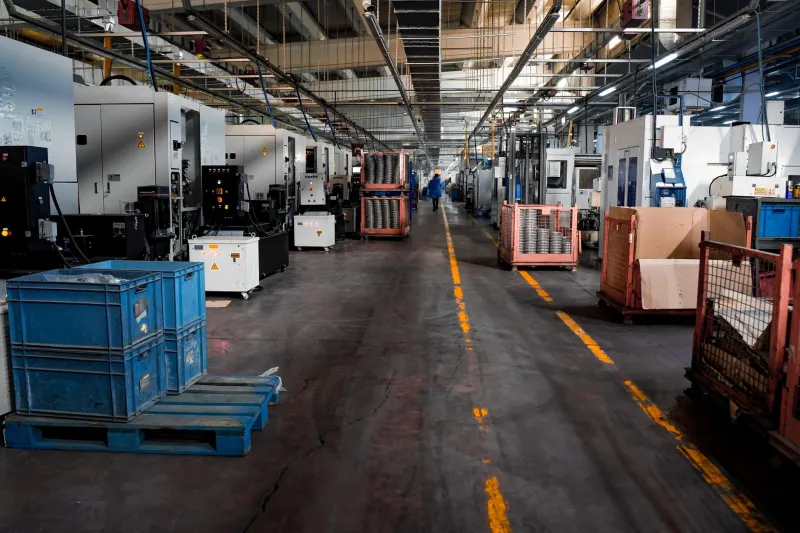
Second, they are explicitly connected to the parent's industrial infrastructure. This is the critical differentiator. An external startup developing advanced materials for industrial applications must negotiate access to manufacturing facilities, testing environments, and supply chain partners from scratch. An internal venture operating within a diversified industrial group walks into those relationships on day one. Prototype cycles that might take an independent company eighteen months can be compressed dramatically when a fully equipped manufacturing floor is available down the corridor.
Third, they maintain staged capital commitments with defined escalation criteria. Rather than deploying large tranches of capital upfront—as traditional VC rounds tend to do—sophisticated captive models release funding incrementally against technical and commercial proof points. This imposes discipline without starving promising projects of the resources they need to reach the next threshold.
The Durability Advantage
One of the most underappreciated dimensions of this model is time horizon. External venture capital operates on fund cycles, typically seven to ten years, with pressure to return capital to limited partners on a predictable schedule. That clock is largely indifferent to the actual maturation timeline of the underlying technology.
Deep industrial innovation rarely respects a fund cycle. Advanced manufacturing processes, novel energy storage chemistries, next-generation materials science—these fields routinely require fifteen or twenty years of sustained development before they reach commercial viability. The venture capital model, structurally, is poorly suited to that timeline. Industrial conglomerates with diversified revenue bases and permanent capital structures are not. When a captive venture project requires an additional three years of development to reach its full potential, the parent organization can absorb that reality without triggering a liquidity crisis.
This durability advantage also changes the risk calculus. External startups operating under investor pressure frequently pivot away from technically difficult problems toward faster, more fundable solutions. Captive ventures, freed from that pressure, can remain committed to genuinely hard problems—the kind that, when eventually solved, create defensible competitive positions rather than incremental improvements.
Commercialization Without the Handoff
Perhaps the most operationally significant benefit of the captive model is what happens when a technology works. In the traditional startup-to-acquisition pipeline, commercialization requires a complex handoff: the startup's team must be integrated, its culture reconciled with the acquirer's, its technology translated into the acquirer's production environment. Each step is a potential failure point.
When a captive venture arm develops a breakthrough, no handoff is required. The technology was built within the industrial ecosystem from the beginning. Manufacturing processes were designed with existing facilities in mind. Supply chain requirements were scoped against relationships the parent already maintains. The path from successful prototype to scaled production is measured in months, not years.
For diversified industrial groups competing in markets where speed to commercialization increasingly determines which player captures value and which arrives too late, that compression is not a marginal advantage. It is a structural one.
The Talent Dimension
Captive venture models are also beginning to reshape how industrial conglomerates attract and retain the engineers, scientists, and product developers who drive technical progress. For years, the most ambitious technical talent gravitated toward startups precisely because large organizations offered limited creative latitude and slow career trajectories.
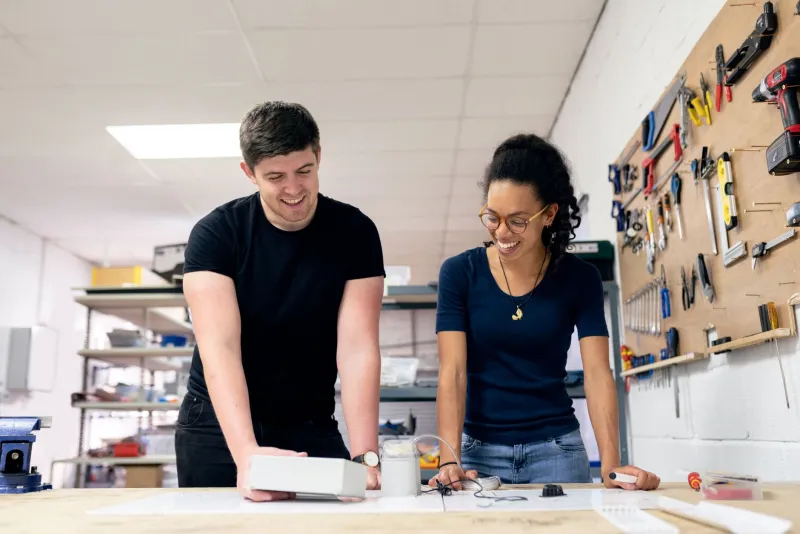
The captive model changes that equation. Engineers working within an internal venture arm operate with meaningful autonomy, pursue genuinely novel problems, and—critically—do so with access to resources no independent startup could assemble. The combination is proving attractive to a segment of technical talent that values both intellectual challenge and the institutional stability to see long-horizon projects through to completion.
A Model Worth Watching
The captive venture arm is not a universal solution. It demands executive commitment, organizational tolerance for ambiguity, and a willingness to accept that some internal bets will not pay off. These are not small asks within organizations built on operational predictability.
But for diversified industrial groups with the capital depth, manufacturing infrastructure, and strategic patience to execute the model well, the returns—measured in proprietary technology, compressed commercialization timelines, and durable competitive differentiation—are beginning to justify the investment. The conglomerates that recognize this early are not simply keeping pace with innovation. They are learning to generate it on their own terms.