Fiscal Fault Lines: How Diversified Industrial Groups Stay Solvent When Washington Can't
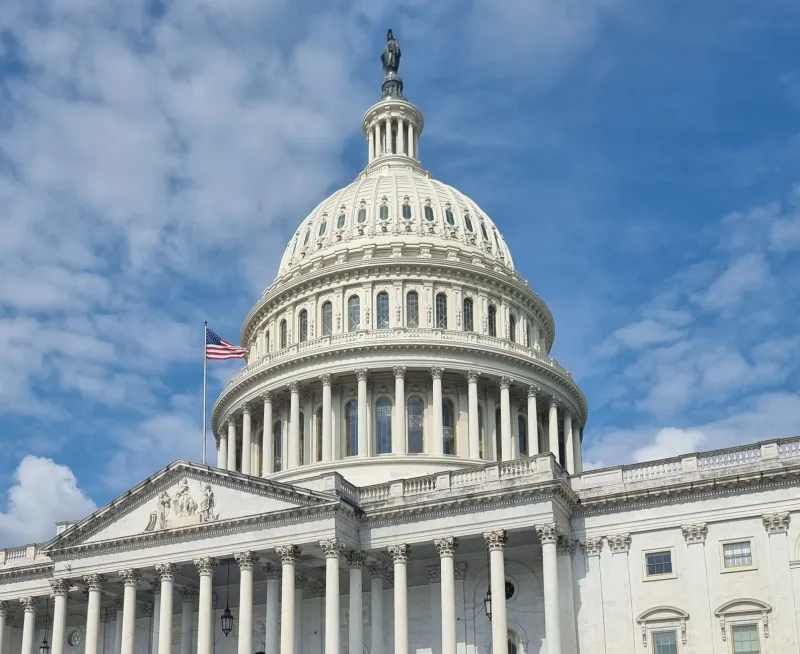
Every few years, Washington manufactures a crisis. The debt ceiling debate returns, government shutdown deadlines loom, and bond markets briefly contemplate the unthinkable. For most American businesses, these episodes trigger a familiar sequence: credit spreads widen, capital expenditure plans get shelved, and CFOs spend sleepless weeks recalculating worst-case liquidity scenarios.
For diversified industrial conglomerates, the calculus is different — not because they are immune to federal fiscal dysfunction, but because their structural composition fundamentally changes how that dysfunction translates into operational and financial risk.
The Anatomy of a Washington-Driven Market Disruption
Understanding why conglomerates hold an advantage requires first understanding precisely how fiscal chaos propagates through the private economy. When debt ceiling negotiations deteriorate and Treasury signals potential payment prioritization, several things happen simultaneously.
Short-term borrowing costs spike, particularly for companies with near-term refinancing needs. Government contractors face payment delays and contract award freezes. Defense procurement slows. Infrastructure spending authorizations stall in appropriations limbo. Consumer confidence softens as financial media amplifies uncertainty. And perhaps most critically, the Federal Reserve's policy flexibility narrows — leaving monetary authorities caught between an economy that may need support and a fiscal backdrop that complicates their messaging.
For a pure-play company operating in a single sector, any one of these pressure points can be severely disruptive. For a company whose revenue is substantially tied to a single government contract cycle or a single consumer confidence metric, a protracted standoff in Washington can threaten solvency itself.
The Cross-Cycle Architecture of the Diversified Group
The structural advantage of a well-constructed conglomerate lies in its exposure across industries that do not respond uniformly to the same external stressors. Consider a business group with meaningful positions across infrastructure services, industrial manufacturing, logistics technology, and essential consumer goods. When a debt ceiling standoff freezes infrastructure appropriations, the infrastructure segment may soften — but the logistics and consumer goods divisions may actually see increased activity as supply chain managers accelerate procurement ahead of anticipated disruption.
This is not mere accident. It is the product of deliberate portfolio construction that treats macroeconomic volatility as a design constraint rather than an external variable to be feared. Cyclical industries — those sensitive to government spending cycles, capital market conditions, and discretionary business investment — are balanced against counter-cyclical or acyclical operations that generate consistent cash flows regardless of what happens in the Senate chamber.
The result is a revenue base that does not move in lockstep with Washington's fiscal calendar. When one division contracts, another stabilizes or expands. The aggregate enterprise weathers the storm in ways that a focused competitor simply cannot replicate.
Balance Sheet Depth as a Strategic Weapon
Beyond portfolio diversification, established industrial conglomerates typically carry balance sheet characteristics that become decisive advantages during periods of fiscal-driven credit market stress.
Fortress-grade balance sheets — characterized by conservative leverage ratios, substantial revolving credit facilities, and long-dated debt maturities — insulate these organizations from the refinancing risks that can become existential for more leveraged competitors. When credit spreads widen in response to Treasury market volatility, a conglomerate with minimal near-term debt maturities simply waits out the disruption. A mid-market pure-play company facing a debt maturity in the middle of a debt ceiling standoff has no such luxury.
This asymmetry has compounding strategic consequences. During periods of fiscal-driven market stress, asset valuations often compress — particularly for smaller, more leveraged competitors who face both operational disruption and financing pressure simultaneously. For a well-capitalized conglomerate, this compression represents opportunity. The same fiscal chaos that threatens competitors creates acquisition windows that disciplined acquirers have historically used to reshape their competitive position at attractive entry points.
Internal Capital Allocation: The Invisible Advantage
One of the least appreciated structural advantages of the diversified conglomerate is its ability to reallocate capital internally without accessing external markets. When public debt markets become expensive or temporarily inaccessible due to Washington-induced volatility, a conglomerate's internal treasury function can redirect cash flows from high-performing divisions toward segments that require investment or bridge financing.
This internal capital market is, in effect, a private credit facility that carries no spread, requires no roadshow, and does not depend on the current mood of bond investors. The enterprise allocates capital based on strategic priority and return potential rather than the availability or pricing of external financing.
For pure-play companies, no equivalent mechanism exists. They must access capital markets on whatever terms those markets offer — and during periods of fiscal uncertainty, those terms can be punitive or simply unavailable at the scale required.
Government Exposure: A Risk That Cuts Both Ways
It would be intellectually dishonest to suggest that diversified industrial groups carry zero exposure to federal fiscal dynamics. Conglomerates with significant defense, infrastructure, or government services businesses do face real headwinds when Washington's budget process breaks down. Contract award delays, continuing resolution spending caps, and procurement freezes are genuine operational challenges.
The critical distinction, however, is that within a diversified group, government-exposed segments represent a portion of the enterprise — not its entirety. The financial impact of a six-week government shutdown on a division that represents fifteen percent of group revenue is manageable. For a defense contractor or government IT services firm whose entire revenue base depends on federal appropriations, the same six-week disruption can be catastrophic.
Furthermore, diversified groups with long-standing government relationships often possess the institutional knowledge and contract management infrastructure to navigate payment delays and temporary spending freezes more effectively than smaller, less experienced operators.
Preparing for a Recurring Reality
The evidence increasingly suggests that fiscal brinkmanship is not an occasional aberration in American political life — it is a recurring feature. The debt ceiling has been raised, suspended, or modified more than a dozen times in the past two decades. Government shutdowns have become an almost predictable element of the budget calendar. Continuing resolutions have replaced formal appropriations as the default mechanism for funding federal operations.
For corporate strategists, this pattern demands a fundamental reframing. Fiscal volatility is not a tail risk to be modeled in stress scenarios — it is a baseline condition to be incorporated into portfolio design, capital structure decisions, and operational planning.
Diversified industrial groups that have built their enterprises with this reality in mind are not merely surviving Washington's recurring dysfunction. They are, in a very real sense, built for it. Their portfolio breadth, balance sheet depth, and internal capital flexibility collectively constitute a structural hedge against the kind of politically manufactured uncertainty that has become a permanent feature of the American economic landscape.
The question for investors and business leaders is not whether fiscal chaos will return. It will. The question is whether the organizations in which they place their confidence are architecturally prepared to absorb it — or whether they are simply hoping Washington will eventually get its act together.
History suggests the latter is not a strategy.