Many Voices, One Strategy: How Multi-Sector Conglomerates Decode Washington Before the Rules Are Written
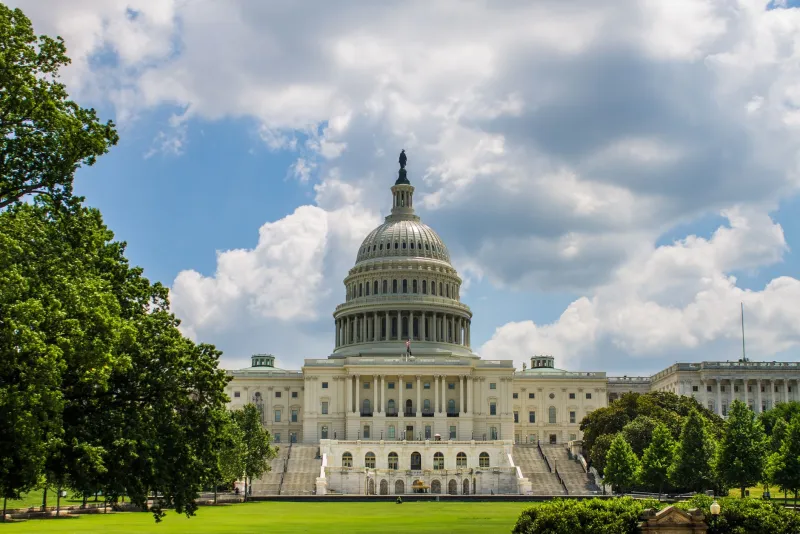
Regulation, in the American context, is rarely a single event. It is a process—drawn out across congressional committees, agency comment periods, interagency coordination meetings, and years of judicial review. By the time a final rule appears in the Federal Register, the organizations best positioned to comply with it—or to have shaped it—have typically been engaged for years. The question worth asking is: who has the structural capacity to participate in that process across every sector that touches their business? For diversified industrial conglomerates, the answer is increasingly clear.
The Fragmentation Problem That Only Scale Can Solve
America's regulatory landscape is not a unified system. It is a patchwork of overlapping jurisdictions—the EPA, OSHA, FERC, the FTC, the SEC, the CFIUS review process, state-level environmental agencies, and dozens of sector-specific bodies—each operating on its own timeline, with its own vocabulary and its own institutional priorities. A company focused on a single industry can develop deep expertise within its regulatory silo. What it cannot do is maintain meaningful situational awareness across silos that don't formally communicate with each other.
This is precisely where the conglomerate structure creates durable value. A diversified industrial group with subsidiaries in energy infrastructure, advanced manufacturing, logistics, and defense-adjacent supply chains does not experience regulatory complexity as a burden to be managed in isolation. It experiences it as a distributed information environment—one that its organizational structure is uniquely suited to navigate.
Each subsidiary, operating in its own sector, maintains relationships with the agencies that govern it, monitors proposed rulemakings relevant to its operations, and employs compliance professionals who understand the informal culture of their particular regulatory environment. The conglomerate parent, sitting above this network, is positioned to aggregate those signals and identify patterns that no single-sector competitor would ever detect.
Listening Posts in Unlikely Places
Consider how regulatory developments in one sector frequently foreshadow what is coming in another. The framework the EPA develops for greenhouse gas reporting in the power sector often becomes the template for similar requirements in heavy manufacturing. The disclosure standards the SEC pilots for climate-related financial risk in large public companies tend to migrate, in modified form, toward supply chain transparency requirements that affect industrial procurement. The data privacy architecture being built around defense contractor cybersecurity standards has a documented tendency to inform civilian critical infrastructure regulation.
A conglomerate with subsidiaries in each of these areas does not need to rely on industry associations or Washington consultants to connect these dots. It connects them internally, through the ordinary cadence of cross-divisional communication. A compliance officer at a subsidiary working through a new EPA proposed rule shares that context with corporate leadership. A government affairs team embedded in a defense-adjacent unit flags an emerging procurement standard. Over time, these inputs accumulate into something that functions less like a compliance calendar and more like a strategic intelligence operation.
This is not incidental. The most sophisticated diversified groups invest deliberately in the institutional infrastructure required to translate subsidiary-level regulatory intelligence into group-level strategic foresight. That means cross-functional coordination structures, shared government affairs platforms, and leadership cultures that treat regulatory engagement as a competitive function rather than an administrative cost center.
Influence, Not Just Intelligence
Anticipation is only part of the advantage. The other part is participation. Federal agencies are required by the Administrative Procedure Act to solicit public comment on proposed rules, and the quality and credibility of those comments matter. An agency drafting a rule affecting industrial emissions is more likely to give substantive weight to technical input from an organization with demonstrated operational expertise across multiple affected sectors than to a single-industry trade association whose comments are predictable and often dismissed as self-interested.
Conglomerates, precisely because they operate across industries, can offer regulators something genuinely valuable: a multidimensional perspective on how a proposed rule will interact with real-world operational complexity. A comment submitted by a diversified industrial group that operates both the generating assets and the manufacturing facilities affected by an energy rule carries a different kind of authority than one submitted by a company with exposure only on one side of that equation.
This positions the conglomerate not merely as a respondent to regulatory change but as a credible participant in shaping it. That distinction has measurable consequences for competitive positioning. When a rule is finalized in a form that reflects the operational realities a conglomerate helped articulate during the comment period, that company is already compliant—or close to it—while competitors scramble to adapt.
The Investment Case for Regulatory Sophistication
From a capital allocation standpoint, this structural advantage has a compounding quality that is easy to underestimate. Regulatory missteps are expensive. Fines, remediation costs, operational shutdowns, and reputational damage from compliance failures represent real losses that erode returns. But the subtler cost—the strategic cost of being surprised by a regulatory shift that a better-informed competitor anticipated—is harder to quantify and often more consequential.
A conglomerate that has invested in the institutional capacity to monitor, interpret, and engage with Washington's rulemaking apparatus across multiple sectors is, in effect, purchasing a form of strategic insurance that compounds over time. Each regulatory cycle deepens the institutional knowledge base. Each engagement with an agency builds relationships that make future engagements more productive. Each cross-subsidiary intelligence synthesis improves the group's ability to anticipate the next cycle.
For investors evaluating diversified industrial groups, regulatory sophistication deserves a place in the analysis alongside more conventional metrics. The capacity to navigate Washington's fragmented rulebook is not merely a compliance function—it is a source of durable competitive advantage that becomes more valuable as the regulatory environment grows more complex, more consequential, and more difficult for any single-sector organization to manage effectively.
Building Tomorrow's Policy Environment Today
At TOTOP Group, the principle that guides our approach to regulatory engagement is the same one that guides our approach to capital allocation: the organizations that shape the environment they operate in will consistently outperform those that merely react to it. Washington's rulemaking process, for all its complexity and inefficiency, is not a black box. It is a structured process with defined entry points, and the conglomerates that understand how to engage it—across every sector they touch—will continue to hold an advantage that pure-play competitors, for structural reasons, simply cannot replicate.
The regulatory landscape ahead is not getting simpler. The intersection of industrial policy, environmental regulation, data governance, and national security review is producing a rulemaking environment of unprecedented complexity. In that environment, the capacity to hear what Washington is saying before it speaks—and to respond with credibility—is worth more than most balance sheets will ever show.