The Gray Dividend: Why America's Demographic Shift Is a Strategic Asset for Industrial Conglomerates
Reframing the Demographic Narrative
The standard account of American demographic change is relentlessly cautionary. Birth rates have declined below replacement level. The Baby Boomer generation is exiting the workforce at a rate of approximately ten thousand individuals per day, carrying with it decades of accumulated technical and institutional knowledge. Immigration policy uncertainty compounds the labor supply challenge. And the cohorts entering the workforce arrive with different expectations around career structure, organizational loyalty, and work modality than the generations they are replacing.
This narrative is not inaccurate. But it is incomplete. For diversified industrial conglomerates with the organizational depth to absorb and respond to demographic complexity, the same trends that threaten leaner, more concentrated competitors represent a structural opening—a long-duration advantage that compounds precisely because it is so difficult to replicate quickly.
What Technology Companies Cannot Buy
Silicon Valley's response to demographic and labor market challenges has been characteristically technological: automate the repetitive, augment the complex, and recruit globally for the elite. This approach works within certain operational parameters. It works less well when the value being created is fundamentally human-capital-intensive—when it depends on the judgment of an experienced process engineer who has spent thirty years refining a specific manufacturing technique, or on the institutional memory of a regional sales team that has maintained customer relationships across multiple economic cycles.
These forms of human capital do not transfer easily between organizations, cannot be recruited in from outside on short notice, and are not replicable through software implementation. They accumulate slowly, within specific organizational contexts, and they depreciate rapidly when the organizational context that sustained them is disrupted.
Diversified industrial conglomerates, by virtue of their scale, longevity, and operational breadth, are uniquely positioned to preserve and leverage this form of capital. A conglomerate with manufacturing operations spanning multiple states and industries has, embedded within its workforce, an extraordinary density of specialized knowledge that took decades to accumulate. The demographic challenge is not how to replace this knowledge when its current holders retire—it is how to transfer it systematically to the next generation of operators before it walks out the door.
The Knowledge Transfer Imperative
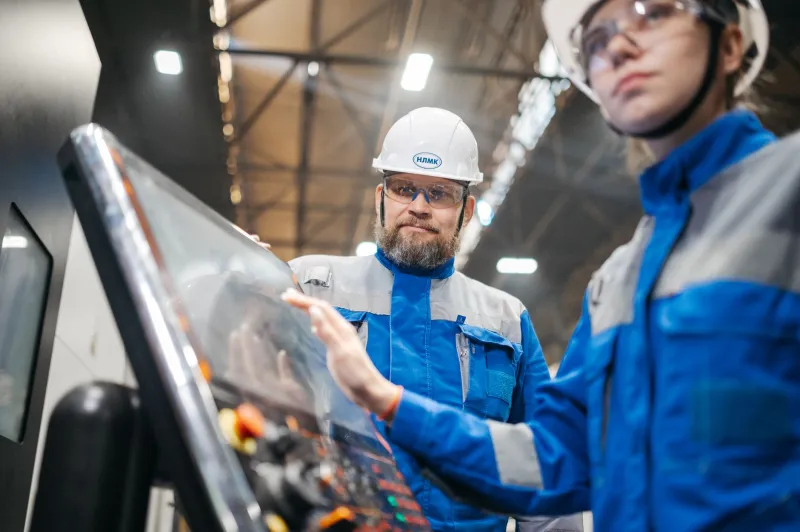
The groups addressing this challenge most effectively are doing so through structured programs that formalize what was previously informal. Apprenticeship arrangements—long a feature of European industrial culture but historically underdeveloped in the American context—are being reimagined within conglomerate structures as internal knowledge transfer mechanisms. An experienced process engineer approaching retirement does not simply vacate a position; she spends the final years of her tenure in a structured mentorship relationship with a designated successor, with both parties evaluated on the quality of the transition.
This model requires organizational patience that is genuinely rare. It asks the organization to invest in a transfer process that produces no immediate productivity gain and whose value is realized only after the senior employee has departed. For a conglomerate with a long-duration capital allocation philosophy and a corporate culture that values continuity over quarterly optimization, this investment is entirely rational. For a technology company whose organizational half-life is measured in product cycles rather than decades, it is structurally incompatible with the operating model.
Geographic Distribution as Demographic Hedge
There is a geographic dimension to the demographic advantage that deserves specific attention. The labor market challenges associated with aging and declining birth rates are not uniformly distributed across the United States. Metropolitan areas with high concentrations of knowledge workers face acute competition for talent, driving compensation costs upward and reducing organizational loyalty. Rural and mid-tier markets, by contrast, often retain workforce populations with strong community ties, lower attrition rates, and a cultural orientation toward long-tenure employment relationships.
Diversified industrial conglomerates, whose operations are frequently distributed across precisely these mid-tier and rural markets by virtue of proximity to raw materials, logistics infrastructure, or legacy facility locations, are structurally embedded in labor markets that behave differently from the coastal technology hubs. This is not merely a cost advantage—though it is that as well. It is an organizational stability advantage. The workforce in a manufacturing facility located in a mid-sized Midwestern city is, on average, more likely to remain with the organization across economic cycles, more likely to develop deep operational expertise over time, and more likely to transmit that expertise to locally recruited successors.
Aging Infrastructure, Aging Workforce, Aligned Opportunity
There is a further alignment worth noting. The demographic aging of the American workforce coincides with the demographic aging of American physical infrastructure—water systems, energy grids, transportation networks, and industrial facilities that were built during the postwar expansion and are now approaching or exceeding their designed service lives. The investment required to maintain, upgrade, and replace this infrastructure over the next thirty years is substantial by any measure.
The workforce capable of executing this investment—civil engineers, industrial electricians, pipe fitters, instrumentation technicians—is itself aging, and the pipeline of trained replacements has been underdeveloped for a generation. This creates a simultaneous supply constraint and demand surge in precisely the labor categories that diversified industrial conglomerates employ in largest numbers.
Groups that have maintained training programs, apprenticeship pipelines, and community college partnerships throughout the lean years are entering this environment with a workforce development infrastructure that cannot be built quickly. Those that allowed these capabilities to atrophy in pursuit of short-term labor cost reduction are discovering that the market for experienced industrial tradespeople is far less liquid than the market for software engineers.
Building the Thirty-Year Workforce
The conglomerates best positioned for the next three decades are those treating workforce strategy not as a human resources function but as a core element of competitive positioning. This means investing in training infrastructure that develops skills internally rather than relying on external labor market availability. It means designing career pathways that reward deep operational expertise rather than defaulting to management hierarchy as the only advancement route. And it means building organizational cultures that value continuity—the accumulated judgment of experienced operators—as a genuine competitive asset rather than a cost to be optimized away.
Demographic headwinds, reframed through this lens, become demographic dividends. The organizations with the patience, the operational depth, and the institutional commitment to develop human capital across generational timelines are not merely surviving the demographic transition. They are using it to extend a competitive advantage that no amount of technology investment can quickly replicate.