The Margin Hidden in Plain Sight: How Industrial Conglomerates Are Dominating the Sectors Nobody Talks About
The Allure of the Overlooked
There is a peculiar irony embedded in modern capital markets. The sectors that attract the loudest conversation—generative AI platforms, offshore wind installations, electric vehicle manufacturing—are precisely the sectors where competitive intensity is highest, margin compression most severe, and long-term winner selection most uncertain. Meanwhile, a different category of business operates largely outside the spotlight, generating consistent free cash flow, maintaining pricing power, and constructing competitive barriers that are extraordinarily difficult to replicate.
For diversified industrial conglomerates, this dynamic represents not a problem to manage but an opportunity to exploit. The unglamorous market segment—what some internal strategists quietly call the "essential infrastructure of everything"—has become a deliberate hunting ground for groups seeking durable returns over speculative ones.
Defining the Unglamorous Advantage
What exactly constitutes an unglamorous market segment? The definition is more precise than it might appear. These are businesses that satisfy several criteria simultaneously: they address non-discretionary industrial or municipal needs, they carry high switching costs for customers, they require specialized technical knowledge that limits new entrant viability, and they operate in regulatory environments that effectively function as moats rather than burdens.
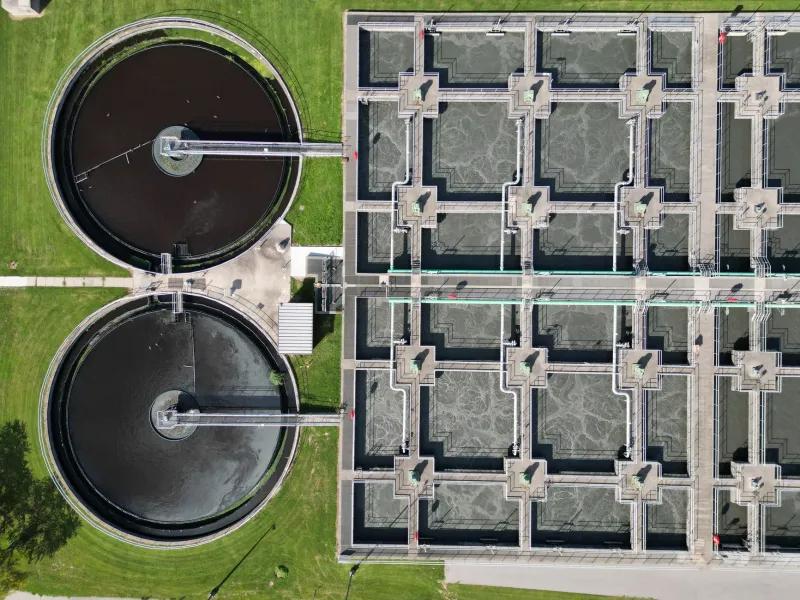
Water and wastewater treatment exemplifies this profile almost perfectly. Municipal water systems across the United States are aging infrastructure that requires continuous chemical inputs, filtration media, membrane technology, and monitoring equipment. The customers—public utilities, industrial facilities, food processors—cannot stop purchasing. Switching suppliers involves not only capital expenditure but regulatory recertification, operational risk, and institutional disruption. For a conglomerate subsidiary operating in this space, the result is a revenue stream that behaves more like an annuity than a commodity contract.
Specialty materials tell a similar story. High-performance adhesives used in aerospace assembly, engineered ceramics for semiconductor fabrication equipment, or polymer compounds formulated for extreme-temperature industrial applications are not products that procurement departments swap out based on a quarterly bid cycle. The qualification process alone—sometimes spanning eighteen months of testing and validation—creates a customer relationship that is effectively permanent absent a catastrophic supplier failure.
Why Conglomerates Capture This Value Better Than Specialists
A focused pure-play company operating in water treatment chemicals or specialty materials faces a structural limitation: it must convince investors, year after year, that its narrow market is exciting enough to warrant continued capital. When growth slows—as it inevitably does in mature, stable markets—the pure-play faces multiple compression regardless of underlying cash generation quality.
The diversified industrial group operates under entirely different capital market dynamics. Within a portfolio of businesses spanning multiple sectors and growth profiles, a water treatment subsidiary does not need to justify its existence through headline growth rates. It needs to justify its existence through contribution to group-wide cash flow, cross-selling leverage, and balance sheet support for adjacent acquisitions. By that measure, the unglamorous business frequently outperforms its glamorous peers within the same portfolio.
There is also a talent dimension that receives insufficient attention. Running a specialty materials operation requires deep technical expertise—polymer chemists, process engineers, regulatory specialists—that is genuinely scarce. A conglomerate that has cultivated relationships with these professionals across multiple subsidiaries, and can offer career mobility within a diversified organization, retains this expertise more effectively than a standalone company competing on compensation alone.
The Acquisition Logic
For groups actively building positions in overlooked segments, the acquisition environment remains structurally favorable in ways that headline sectors are not. Valuations in water treatment, industrial filtration, specialty coatings, and precision automation components reflect their perceived lack of excitement. Sellers in these markets are frequently founder-operated businesses or divisions of larger companies executing portfolio rationalization strategies—motivated vendors whose primary concern is operational continuity rather than auction-maximizing price discovery.
This creates an asymmetric opportunity. A conglomerate acquiring a specialty chemical distributor serving municipal water systems at a modest multiple is not competing against a field of venture-backed competitors or sovereign wealth funds. It is competing against a limited pool of strategic buyers who understand the business and a private equity universe that finds the growth profile insufficiently compelling for a five-year hold horizon.
The result, executed consistently over time, is a portfolio of businesses that individually appear unspectacular but collectively generate the kind of through-cycle earnings stability that sophisticated institutional investors increasingly value.
Compounding the Quiet Returns
Perhaps the most underappreciated dimension of the unglamorous segment strategy is its compounding characteristic. Businesses with high customer retention, pricing power indexed to input costs or regulatory requirements, and low capital intensity relative to earnings generate cash that can be redeployed into additional acquisitions within the same or adjacent niches.
A conglomerate that enters water treatment through a chemical supply acquisition can subsequently add a monitoring technology business, a membrane filtration operation, and a municipal consulting subsidiary. Each addition strengthens the competitive position of the others, creates cross-selling opportunities, and deepens the switching cost moat that protects the entire cluster from competitive disruption.
This is not a novel insight—the most enduring industrial groups in American business history were built precisely this way. What has changed is the competitive landscape. As capital floods into technology and clean energy, the unglamorous segments have become, paradoxically, more attractive. The contrarian premium is real, and the groups disciplined enough to pursue it are building competitive positions that will be exceptionally difficult to displace.
The Strategic Imperative
For investors evaluating diversified industrial groups, the presence of unglamorous segment exposure should be read not as a liability but as evidence of strategic sophistication. The ability to identify, acquire, and integrate businesses that generate durable value without requiring narrative support from financial media is precisely the capability that separates enduring conglomerates from those that chase cycles.
The quiet revolution in industrial portfolio construction is already underway. The groups leading it are not announcing it loudly. That, in itself, is part of the strategy.