Acquiring Resilience: How Reshoring Is Rewriting the Rules of Industrial M&A
For most of the past three decades, the dominant logic of industrial mergers and acquisitions was efficiency. Companies acquired suppliers to reduce costs, consolidate overhead, and extract margin from scale. Geographic proximity was a secondary consideration at best. The global supply chain, it was widely assumed, had rendered location largely irrelevant.
That assumption did not survive contact with reality.
The sequence of disruptions that began with the US-China trade conflict, accelerated through the COVID-19 pandemic, and deepened with the war in Ukraine has produced a fundamental reassessment of supply chain architecture across American industry. What companies are now acquiring — and why — reflects a strategic logic that would have seemed almost quaint a decade ago: the logic of resilience over pure efficiency, and proximity over lowest unit cost.
The Dealmaking Shift in Numbers and Narrative
The volume of domestic industrial acquisitions has expanded meaningfully since 2021, with a notable concentration in transactions that carry explicit supply chain rationale. Acquirers are not simply buying revenue or customer lists. They are buying geographic positioning, domestic production capacity, and the ability to reduce single-source dependencies that geopolitical volatility has rendered unacceptably risky.
Deal structures reflect this shift. Assets that would previously have been valued primarily on EBITDA multiples are now commanding premiums tied to strategic positioning — their location relative to key customers, the nature of their supplier relationships, and their capacity to serve as anchors for regional manufacturing ecosystems. A mid-market precision machining company in the Midwest, for instance, may attract acquisition interest not simply for its financial profile but for its proximity to automotive assembly plants that are themselves reshoring component production.
This strategic premium is reshaping valuation frameworks in ways that traditional industrial deal analysts are still calibrating. The question is no longer only what a target earns — it is what a target enables.
Vertical Integration as a Risk Management Strategy
The reshoring-driven M&A wave is, at its core, an exercise in vertical integration — but vertical integration motivated by risk management rather than margin expansion. Companies that previously outsourced upstream production to lower-cost international suppliers are now acquiring those capabilities domestically, accepting higher unit costs in exchange for supply chain visibility, lead time reliability, and reduced exposure to geopolitical disruption.
In the semiconductor and advanced electronics sectors, this dynamic is most visible. Following the acute shortages of 2021 and 2022, a range of US manufacturers accelerated domestic acquisition strategies targeting chip packaging, printed circuit board fabrication, and specialty component production. The CHIPS and Science Act provided additional tailwind, creating incentive structures that made domestic semiconductor-adjacent assets substantially more attractive to acquirers.
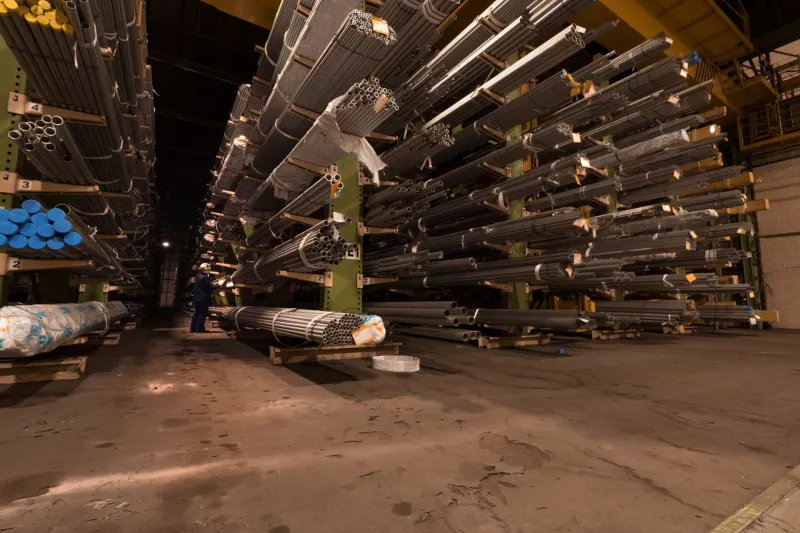
But the pattern is not confined to electronics. In industrial chemicals, pharmaceutical ingredients, specialty metals, and defense-related manufacturing, the acquisition of domestic production capacity has become a board-level strategic priority rather than an operational afterthought.
Regional Manufacturing Hubs: The New Acquisition Target
One of the more consequential trends within this reshoring M&A wave is the emergence of regional manufacturing hubs as deliberate acquisition targets. Rather than pursuing single-facility deals, sophisticated acquirers are identifying geographic clusters — concentrations of complementary suppliers, workforce infrastructure, and logistics capacity — and acquiring anchor positions within them.
The logic is sound. A single domestic supplier acquisition reduces one dependency. An anchor position within a regional manufacturing ecosystem reduces many simultaneously, while also providing access to supplier relationships, technical talent pools, and local institutional knowledge that cannot be replicated by a standalone facility.
The Tennessee-Kentucky automotive corridor, the Gulf Coast petrochemical complex, and the emerging battery manufacturing belt stretching from Michigan through Ohio and into Georgia represent examples of regional concentrations that are attracting this kind of strategic acquisition interest. Companies that establish early positions within these clusters gain not only current supply chain advantages but optionality as the ecosystems continue to develop.
Valuation Tensions and Deal Complexity
The reshoring premium has introduced genuine complexity into industrial deal negotiations. Sellers of domestic manufacturing assets — particularly those with established customer relationships and demonstrable production reliability — are increasingly aware of the strategic value they represent to acquirers. This awareness is translating into elevated price expectations that do not always align with traditional earnings-based valuation models.
For acquirers, the challenge is constructing valuation frameworks that credibly capture strategic value without overpaying for assets whose financial performance may not fully justify headline multiples. The most sophisticated buyers are developing proprietary models that incorporate supply chain risk reduction value, customer retention probability, and regional ecosystem positioning into their pricing analysis — moving beyond conventional EBITDA multiples to account for the full strategic benefit of domestic acquisition.
Deal structure is evolving in parallel. Earnout provisions tied to supply chain performance metrics — delivery reliability, lead time consistency, capacity utilization under surge conditions — are appearing with greater frequency, aligning seller incentives with the operational outcomes that acquirers are fundamentally purchasing.
Sectors Leading the Transformation
While reshoring-driven M&A activity is visible across a broad range of industries, several sectors are leading the transformation in both transaction volume and strategic ambition.
Defense and aerospace manufacturing represents perhaps the most acute concentration of reshoring acquisition activity, driven by both commercial demand and explicit federal policy pressure to reduce dependence on foreign-sourced components in defense supply chains. The industrial base requirements embedded in recent defense authorization legislation have created direct incentives for prime contractors and their Tier 1 suppliers to acquire domestic production capabilities.
Medical device and pharmaceutical manufacturing is experiencing a parallel dynamic, accelerated by the supply disruptions that exposed the risks of offshore active pharmaceutical ingredient production during the pandemic. Domestic API manufacturing assets and medical device component producers have attracted significant acquisition interest from both strategic buyers and private equity sponsors with healthcare manufacturing theses.
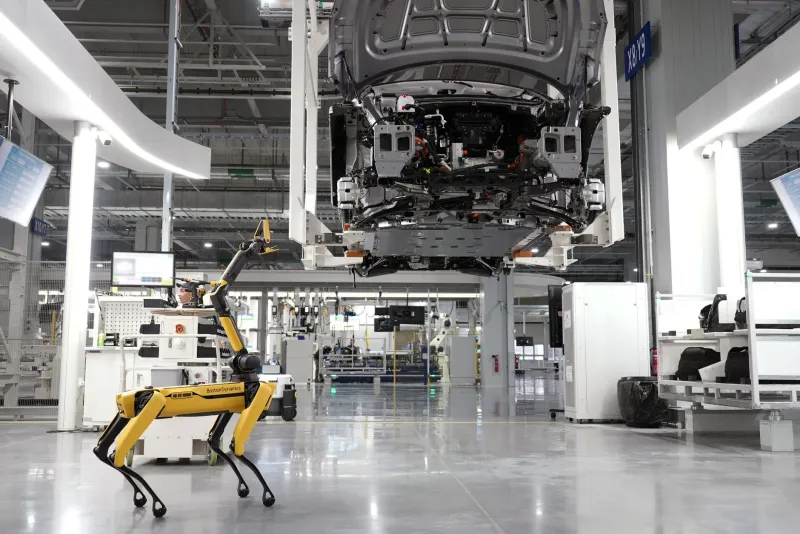
Industrial automation and robotics — itself a key enabler of economically viable domestic manufacturing — represents a third concentration of activity, as companies acquiring reshored production capacity simultaneously seek the automation technology necessary to operate it competitively against lower-wage international alternatives.
The Strategic Imperative Going Forward
The reshoring M&A wave is not a temporary response to a passing disruption. It reflects a durable recalibration of how American corporations assess supply chain risk — and that recalibration is still in its early stages. The geopolitical conditions that made global supply chain concentration so problematic have not resolved, and in several dimensions have intensified.
For business groups positioned across industrial sectors, the implication is clear: the companies that move decisively to acquire domestic supply chain capabilities now will establish competitive positions that become progressively more difficult for later entrants to replicate. The assets are finite. The strategic window, while still open, will not remain so indefinitely.
At TOTOP Group, the conviction that industrial resilience and long-term competitive advantage are built through deliberate, well-structured investment — not reactive improvisation — shapes how we evaluate M&A opportunities across our portfolio. The reshoring transformation is one of the defining industrial reconfigurations of this decade. The organizations that recognize it as such, and act accordingly, will be the ones building the industries of tomorrow.